

Research Programme / 001
India’s Material Sovereignty.
The capability to see, secure, transform and substitute the materials on which national power depends.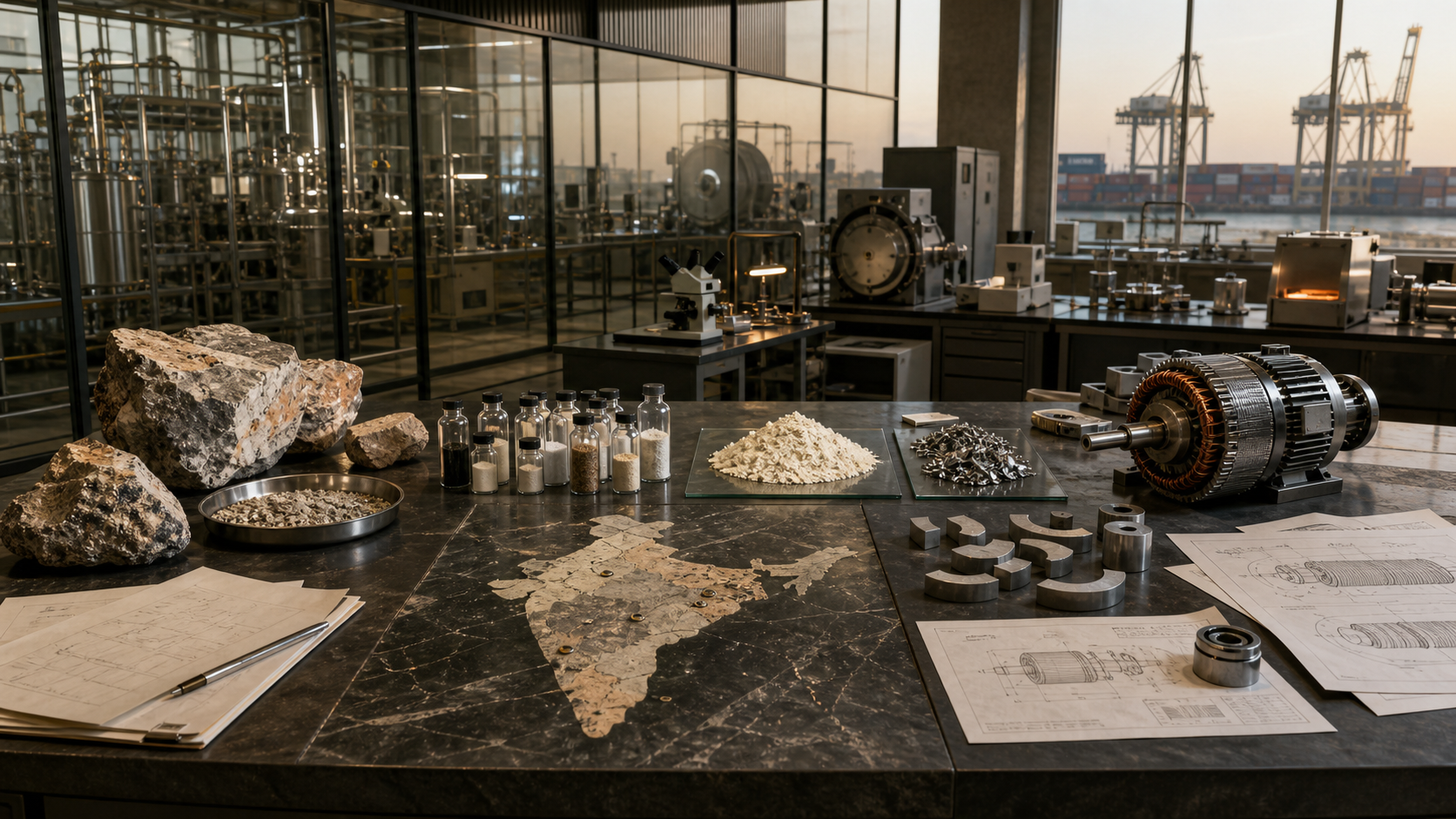
DOSSIER / 001 · RELEASED
India and the Permanent-Magnet Chain.
The programme’s first evidence-bearing study reconstructs the distance between rare-earth resource, industrial transformation and application-qualified capability.
Enter the dossier ↗FOUNDATIONAL THESIS
Sovereignty is the preservation of choice under material constraint.
Material sovereignty is not autarky. It is the institutional capacity to understand dependence before crisis, preserve choice under constraint and build the knowledge, relationships and productive capability required to act.
Import share reveals exposure. It does not, by itself, reveal where the chain can break, how long substitution takes or which institution must acquire the missing capability.
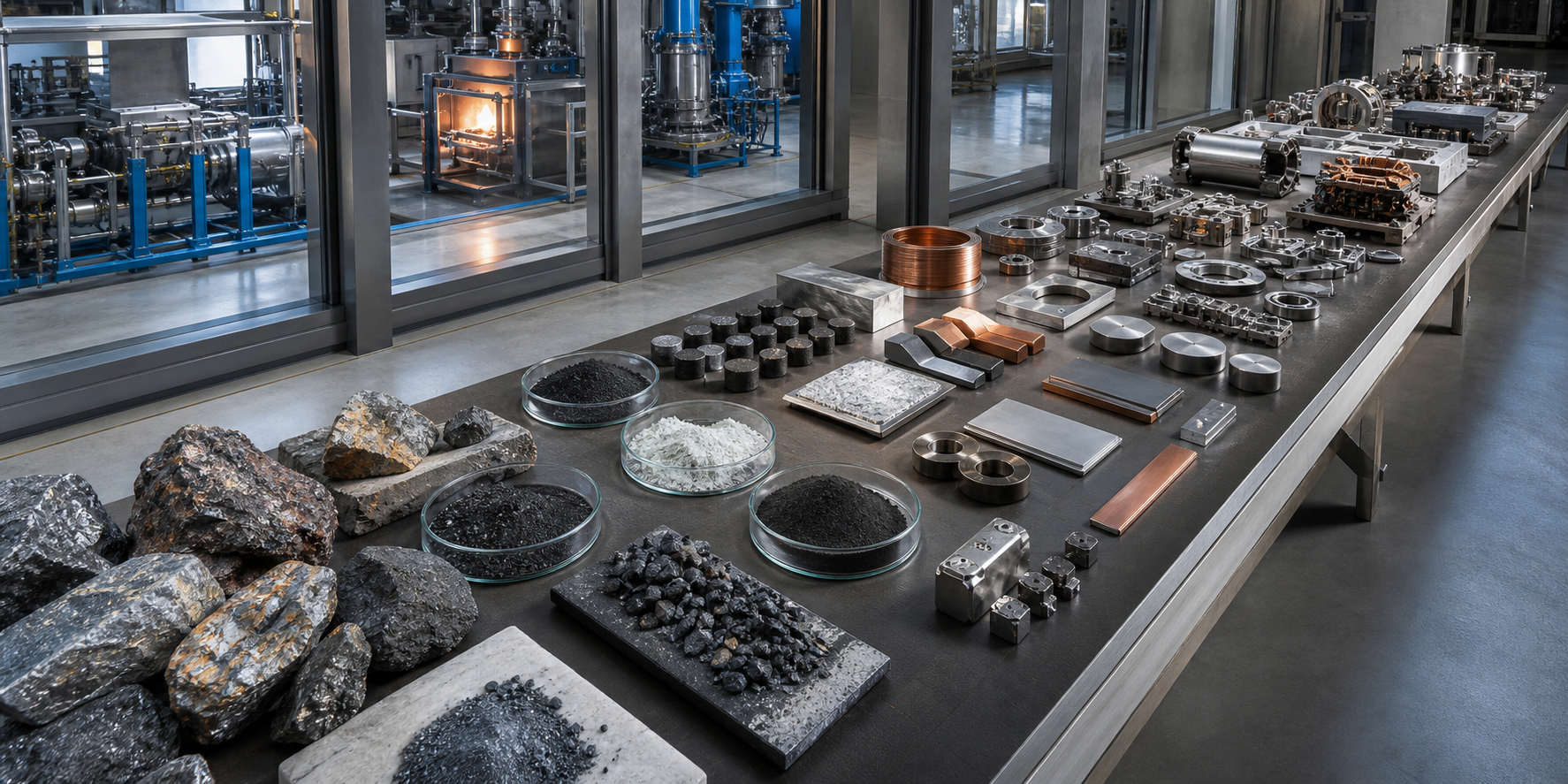
The programme follows transformation, not commodities in isolation.
UNIT OF ANALYSIS
Eight thresholds separate possession from capability.
Each threshold can contain a different geography, institution, technology, time horizon and failure mode. The programme will examine chains at the level at which substitution and strategic choice are actually possible.
Resource
Ore, brine, feedstock, scrap or biological source.
Concentration
Separation, beneficiation and the first loss of optionality.
Refining
Purity, chemistry, energy, water and process control.
Engineered material
Alloys, powders, wafers, precursors, substrates and active ingredients.
Component
The qualified part through which material becomes technical function.
Equipment
Plant, tooling, metrology and production knowledge required to reproduce it.
Operating system
Standards, logistics, finance, energy, skills and institutional coordination.
Strategic capability
The capacity to sustain, adapt and recover the system under pressure.
INITIAL FIELD OF ENQUIRY
Six material systems through which modern India becomes operable.
These are starting territories, not a declaration that the research is complete. Each dossier will narrow to specific materials, grades, processes and strategic capabilities.
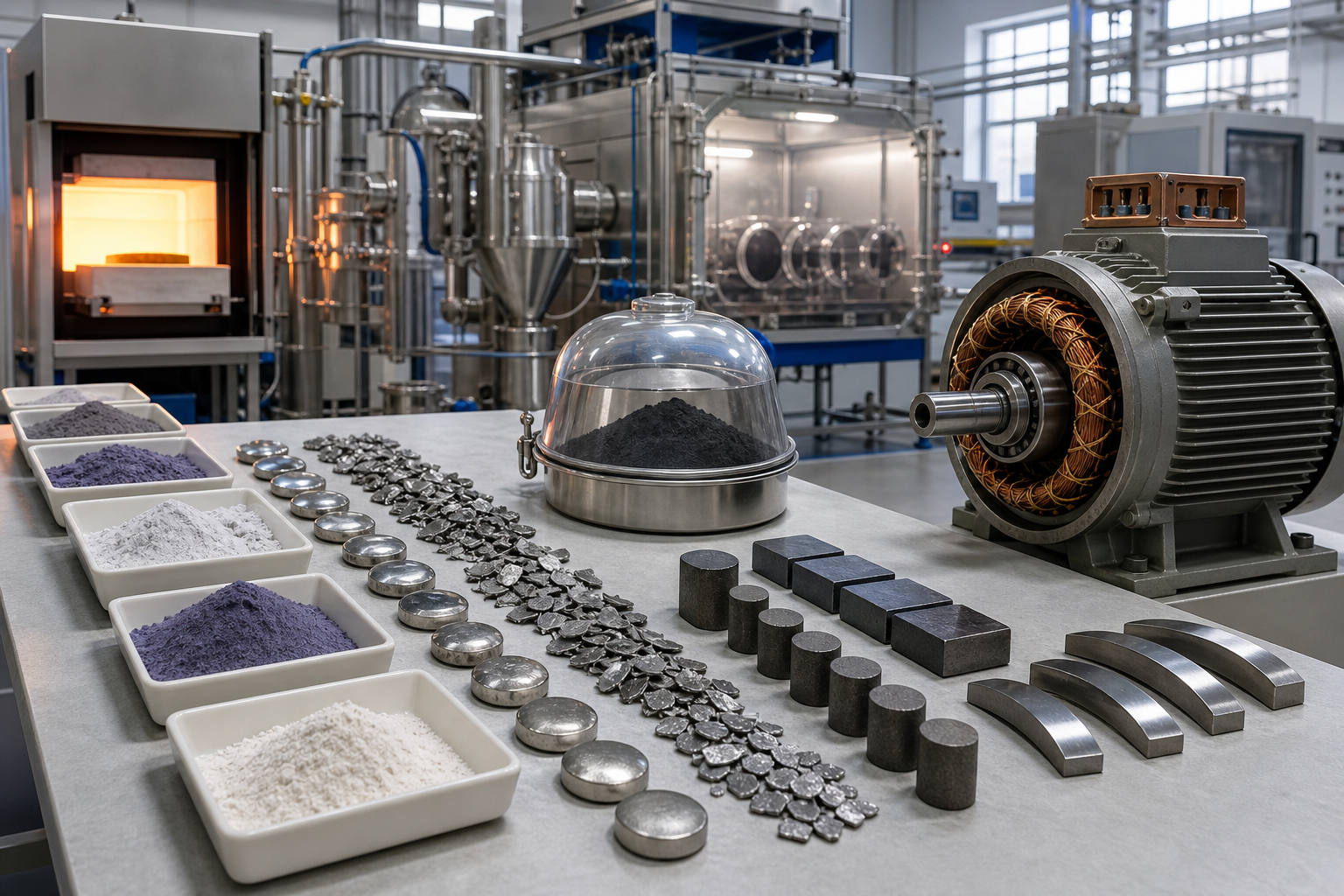
Critical minerals & permanent magnets
A mineral resource is not yet a magnet capability.Follow rare-earths from geology and separation through oxides, metals, alloys, magnet manufacture, qualification and end-use demand.
- Separation chemistry
- Metals and alloys
- Magnet manufacturing
- Qualification
- End-use coordination
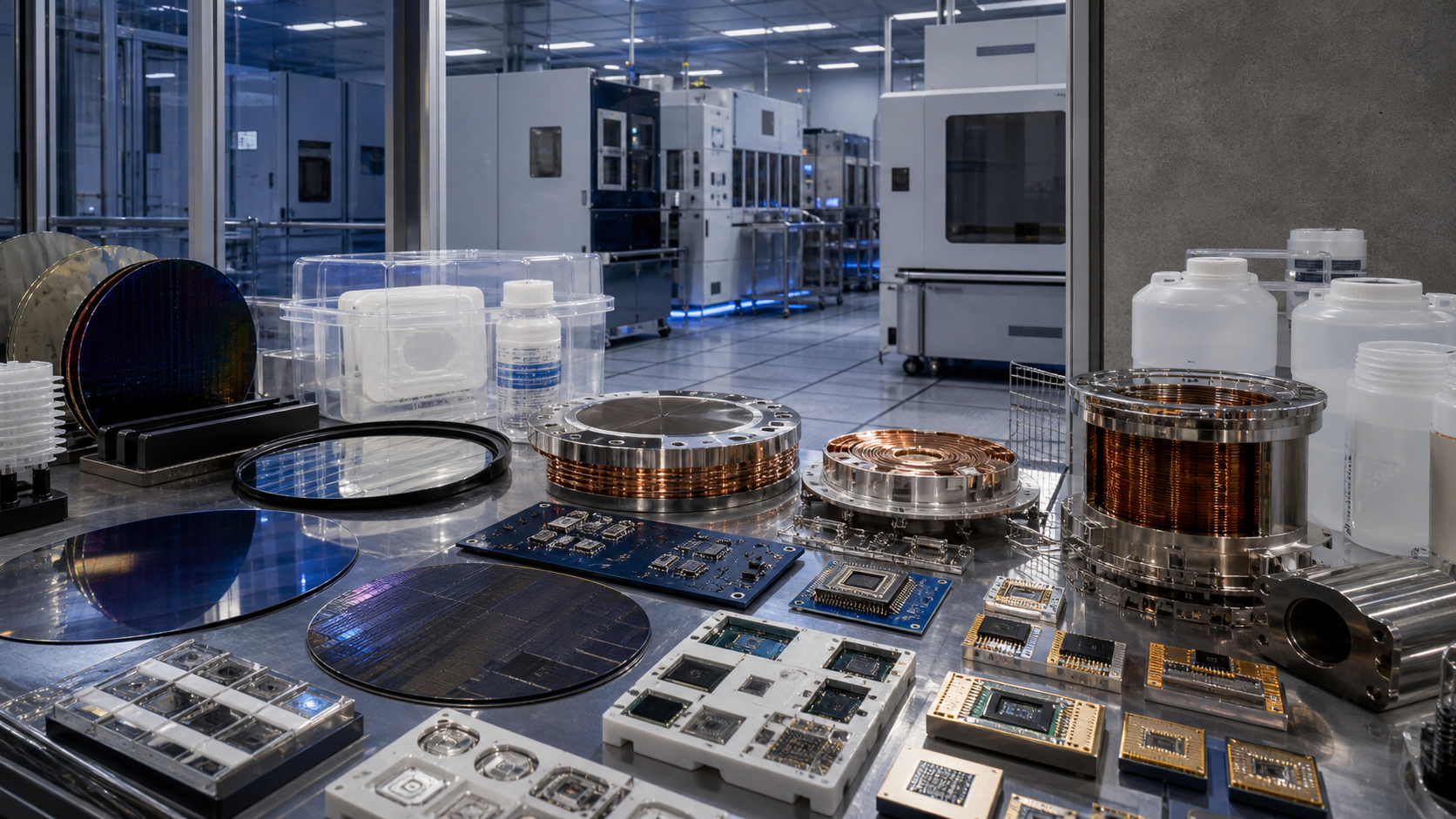
Semiconductors & fabrication inputs
A fabrication plant contains many supply chains inside one clean room.Examine substrates, gases, chemicals, photomasks, equipment, packaging, testing, design infrastructure and the tacit knowledge that joins them.
- Electronic-grade materials
- Process equipment
- Packaging and testing
- Design tools
- Yield knowledge
Energy-transition materials
The energy transition relocates dependence; it does not abolish it.Trace battery, solar, grid and power-electronics materials from extraction through processing, manufacturing, use, recovery and substitution.
- Battery minerals
- Graphite and anodes
- Solar inputs
- Power electronics
- Recovery systems
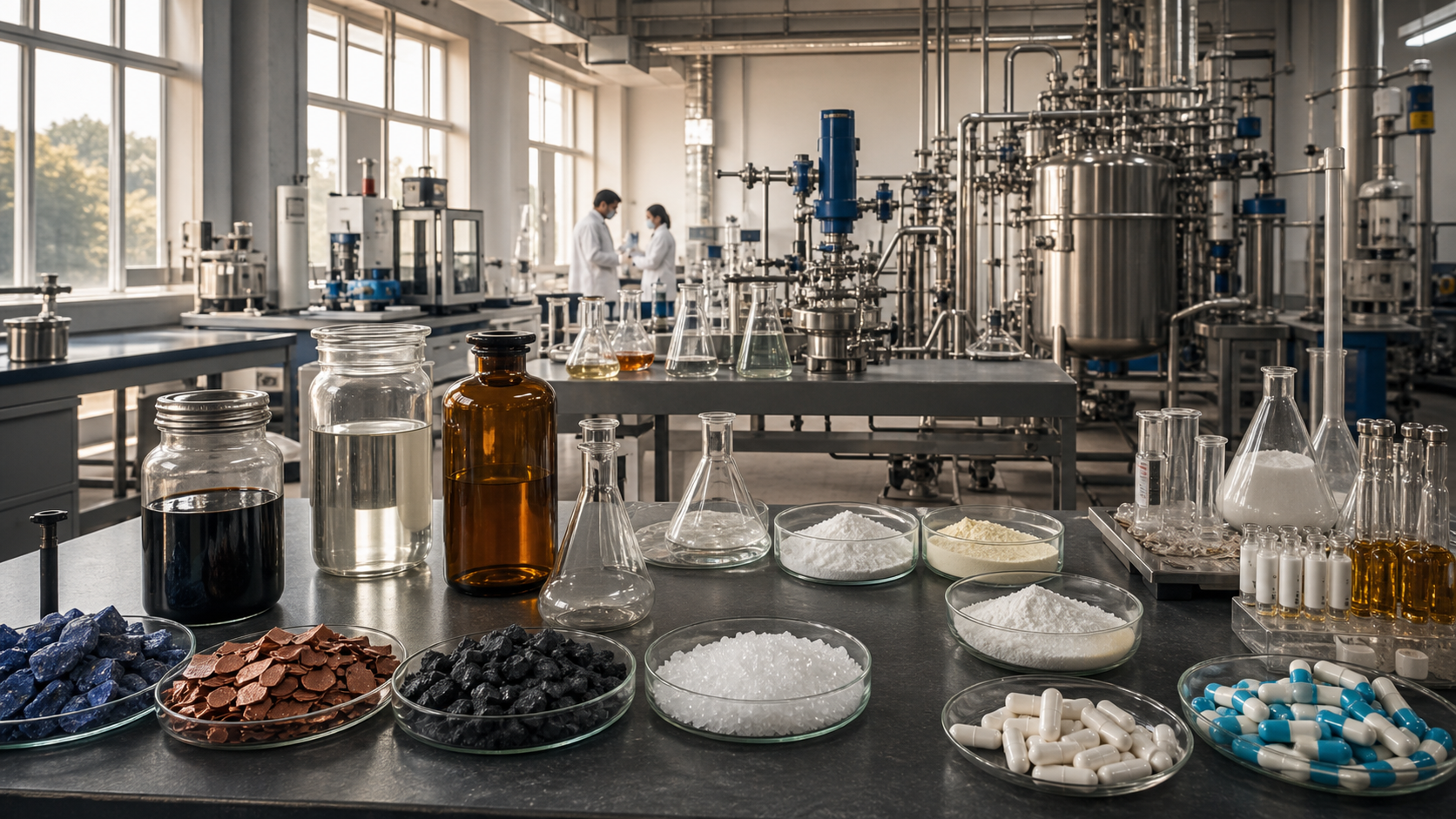
Pharmaceutical intermediates
A finished medicine can conceal a long chain of chemical dependence.Reconstruct selected key starting materials, drug intermediates and active ingredients alongside process economics, environmental infrastructure and continuity risk.
- Key starting materials
- Drug intermediates
- Fermentation
- Chemical synthesis
- Common infrastructure
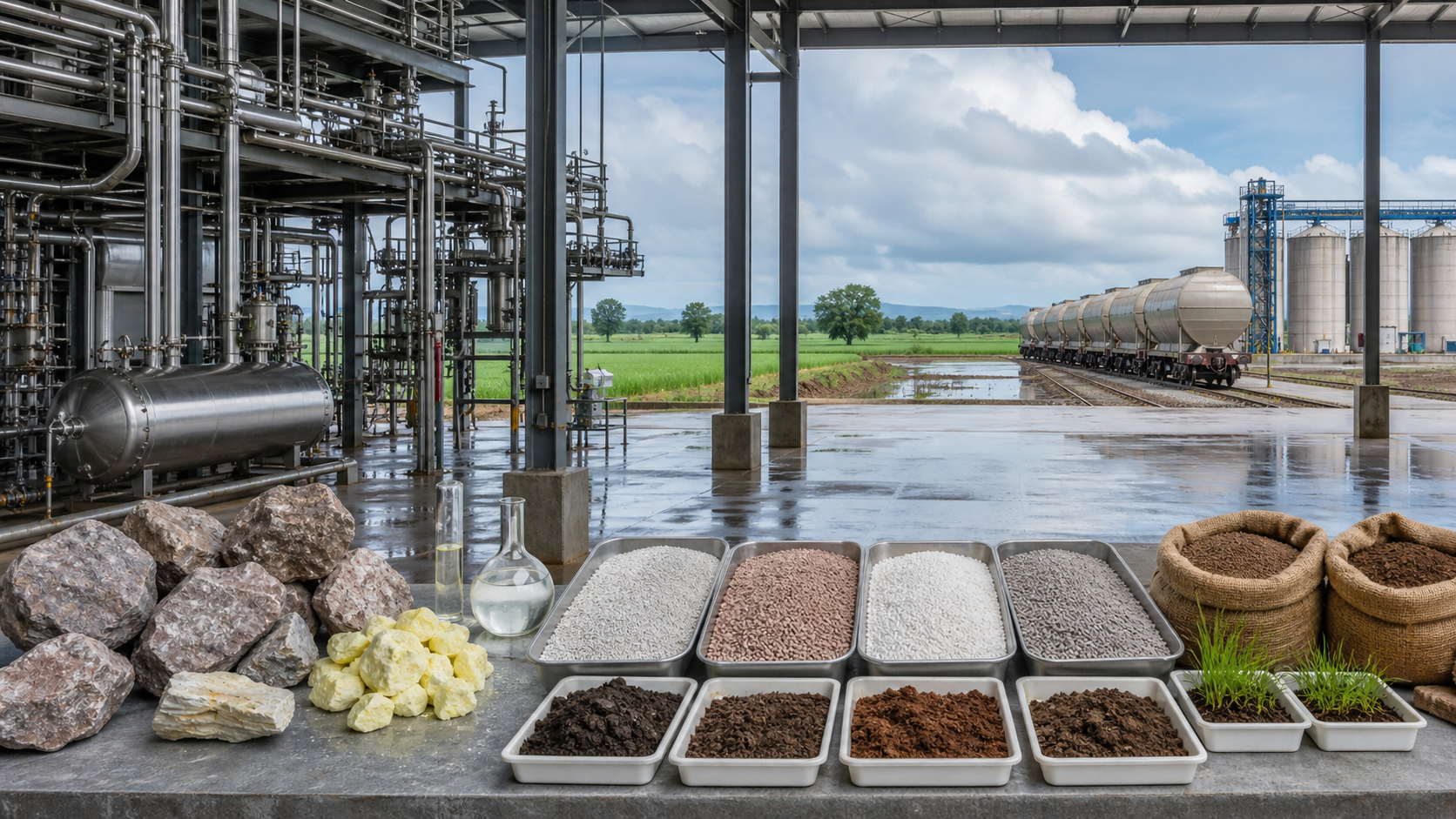
Fertilizer & agricultural nutrients
Food security begins before the field—in mines, gas markets, ports and chemical plants.Examine phosphate, potash, gas, ammonia, sulphur and phosphoric acid as a coupled material system extending from global supply to soil use.
- Rock phosphate
- Potash
- Natural gas
- Ammonia and acids
- Ports and distribution
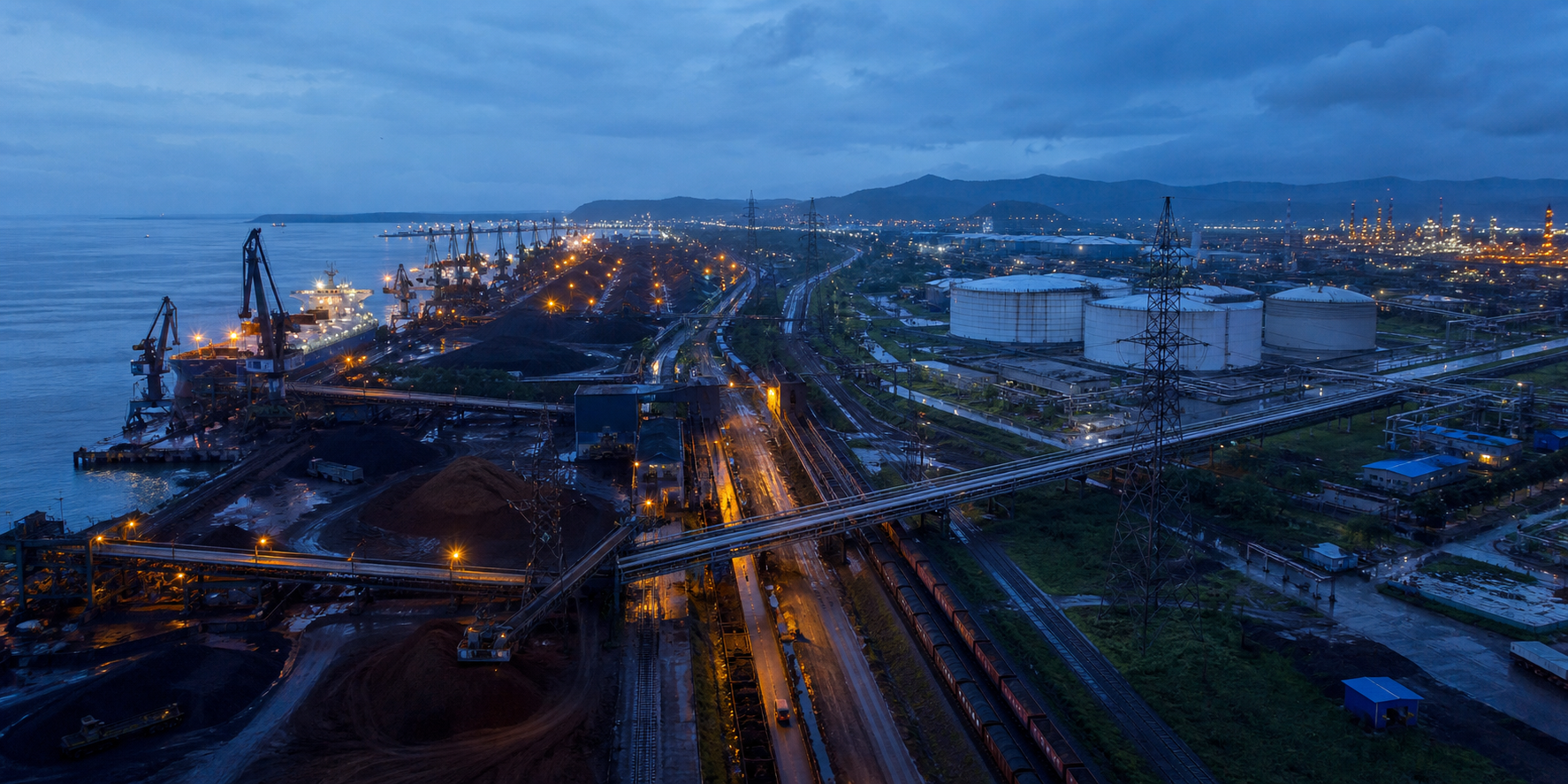
Strategic alloys & industrial materials
Capacity at the tonnage level can coexist with dependence at the grade level.Study specialty steels, superalloys, electrical steels, refractory materials and other grades whose qualification determines industrial and strategic capability.
- Alloying inputs
- Specialty grades
- Process routes
- Standards
- Qualification and demand
ANATOMY OF DEPENDENCE
Dependence is not a number. It is a structure.
The research will separate immediate supply exposure from the deeper institutional conditions that determine whether India can diversify, substitute, recover or build.
Geographic concentration
Where extraction, processing and reserves are concentrated—and which routes connect them to India.
Processing concentration
Whether material can be mined but not separated, refined or engineered at the required purity.
Technology & equipment
The furnaces, tools, software, metrology and intellectual property required to reproduce capability.
Standards & qualification
How long a substitute takes to certify for medical, automotive, grid, aerospace or defence use.
Energy, water & logistics
The enabling systems without which nominal capacity cannot operate at quality or scale.
Capital & market structure
The demand certainty, working capital, insurance and offtake required to sustain domestic production.
Skills & tacit knowledge
The operational knowledge that cannot be acquired simply by purchasing a plant or licence.
Time to substitute
The period between recognizing a dependency and possessing a safe, qualified alternative.
Plate II / Material geography
Every dependency has a route, a clock and a jurisdiction.
Port · rail · processing · power · finance · qualification · demandRESEARCH CONDUCT
From public evidence to decision-grade understanding.
The programme will publish what can be independently examined and distinguish documented fact, analytical inference, unresolved question and strategic option.
- I
Select
Define the material system and the consequential capability it enables.
- II
Reconstruct
Follow the chain across firms, jurisdictions, processes, standards and infrastructure.
- III
Test
Distinguish nominal capacity from operable, qualified and resilient capability.
- IV
Compare
Examine diversification, substitution, recycling, stockpiling, overseas access and domestic build pathways.
- V
Publish
Release evidence, method, uncertainty and strategic options without converting analysis into slogan.
PLANNED PUBLIC OBJECTS
The programme must leave an evidence infrastructure behind.
Release will follow research maturity. A prospectus is not an atlas; a dossier is not a national finding; an option is not a recommendation until its assumptions and consequences are declared.
Dependency Atlas
A relational and geographic account of material chains, facilities, jurisdictions and chokepoints.
Material Dossiers
Deep studies of selected materials from resource through strategic capability. Dossier 001 on India’s permanent-magnet chain is now released.
Chokepoint Ledger
The processes, equipment, standards, routes and concentrated actors whose failure alters national choice.
Time-to-Capability Matrix
A disciplined comparison of what can be diversified quickly and what requires years of institution-building.
Strategic Options
Decision papers comparing build, partner, acquire, substitute, recycle, stockpile and insure pathways.
Open Method & Sources
A public record of evidence, definitions, uncertainty, revisions and data limitations.
FOUNDING SOURCE REGISTER
The first evidence should remain reachable.
These official records establish the programme’s initial public baseline. They do not exhaust the evidence or pre-judge the findings of later material dossiers.
Critical Minerals for India
Official criticality framework and list used to establish the programme’s mineral baseline.
2023 ↗S/02Ministry of MinesNational Critical Mineral Mission
Government mission spanning domestic production, overseas assets, recycling, trade, technology, skills and finance.
2025 ↗S/03India Semiconductor MissionIndia Semiconductor Mission
Official programme architecture for fabs, packaging, design and semiconductor ecosystem development.
Current programme record ↗S/04Press Information Bureau · Department of PharmaceuticalsProduction Linked Incentive Scheme for critical KSMs, drug intermediates and APIs
Official account of the policy response to concentrated pharmaceutical-input dependence.
2026 ↗S/05Press Information Bureau · Department of FertilizersGeopolitical risks and long-term fertilizer raw-material supplies
Official evidence on imported raw materials and the role of long-term supply arrangements.
2026 ↗S/06Ministry of SteelProduction Linked Incentive Scheme for Specialty Steel
Official programme record for domestic capability in selected high-value steel categories.
Current programme record ↗S/07Press Information Bureau · Ministry of Heavy IndustriesManufacturing of Sintered Rare Earth Permanent Magnets
Official account of the intended integrated chain from rare-earth oxides to finished magnets.
2025 ↗PARTICIPATION
Place a material system before the programme.
The Foundation welcomes documented corrections, primary evidence, technical criticism and serious institutional correspondence from researchers, operators, manufacturers, public authorities, financiers and domain specialists.
contact@natarajalabs.org ↗Return to editions ↗